Call for personalized help and best rates: 804-331-1336 
Let’s take a closer look.
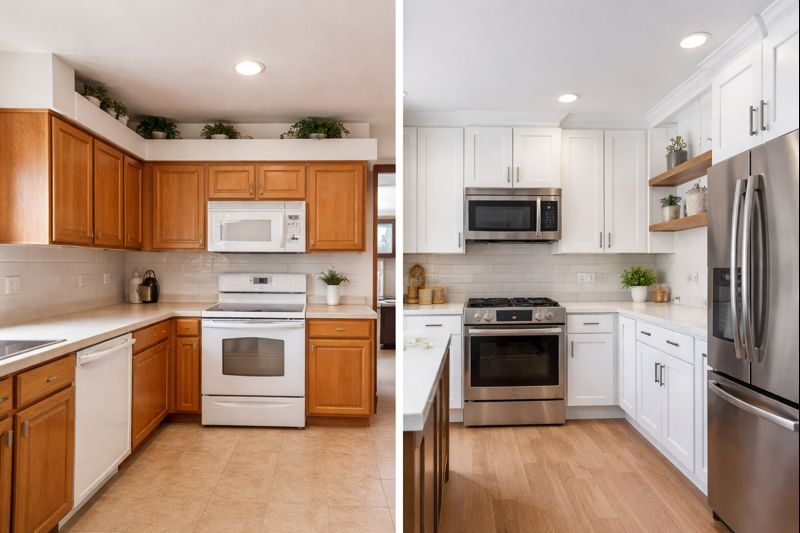
If you’ve looked at older kitchens and newer remodels side by side, you may have noticed one big difference: the disappearance of soffits. Once a standard feature in American kitchens, soffits have steadily fallen out of favor over the past few decades. But why did that happen — and are soffits completely obsolete today?
Brief History of Kitchen Soffits
1970s–1990s: The Standard Approach
During this era, soffits (also known as bulkheads, box-outs, or fur-downs) were extremely common. Builders used them to:
- Fill the space between wall cabinets and the ceiling
- Hide ductwork, plumbing, or electrical runs
- Simplify cabinet installation without custom sizing
At the time, this approach was practical, cost-effective, and widely accepted as normal kitchen design.
Early 2000s: Design Preferences Begin to Shift
As kitchens became more open and design-focused, soffits started to feel builder-grade rather than intentional. Homeowners began favoring kitchens that felt taller, brighter, and more seamless. This pushed demand toward cabinets that extended closer to — or all the way up to — the ceiling.
2010s to Today: A Cleaner, Taller Look
In modern kitchens, especially mid-range and high-end remodels, soffits are often eliminated entirely. Instead, designers commonly use:
- Full-height wall cabinets
- Crown molding to close the gap to the ceiling
- Open shelving or decorative space above cabinets
- Tray or coffered ceilings to enhance vertical visual space
Why Soffits Fell Out of Favor
Several practical and aesthetic reasons contributed to their decline:
- Visual Impact: Soffits can make ceilings feel lower and kitchens feel boxed in.
- Lost Storage: Removing soffits allows for taller cabinets and more usable space.
- Improved Cabinet Options: Modern cabinetry comes in more height variations, reducing the need for filler structures.
- Lighting Preferences: Today’s kitchens rely more on recessed lighting and under-cabinet lighting rather than soffit-mounted fixtures.
Are Soffits Still Used Today?
Yes — just far less often, and usually for specific reasons.
Soffits can still make sense in:
- Homes with uneven ceilings or exposed ductwork
- Budget-conscious renovations, where removing a soffit would require major drywall or mechanical changes
- Retro or mid-century kitchens, where soffits feel intentional and period-appropriate
In these cases, a well-designed soffit can still serve a practical purpose without looking out of place.
The Bottom Line
Soffits aren’t “bad” — they’re just no longer the default. As kitchen design has shifted toward cleaner lines, taller cabinets, and more efficient storage, soffits have naturally become less common. Today, whether to keep or remove a soffit depends on your home’s structure, budget, and overall design goals.
If you’re planning a kitchen renovation, understanding why soffits were used — and why they’re often removed — can help you make a more informed design decision.